- 1. Prep and prime
Glue the wall to its base, fill any gaps, and prime black or dark grey. If you have a grey spray (Mechanicus Standard Grey), use it — it saves a basecoat step and the blue‑grey covers better over grey than black.
2. Stone basecoat
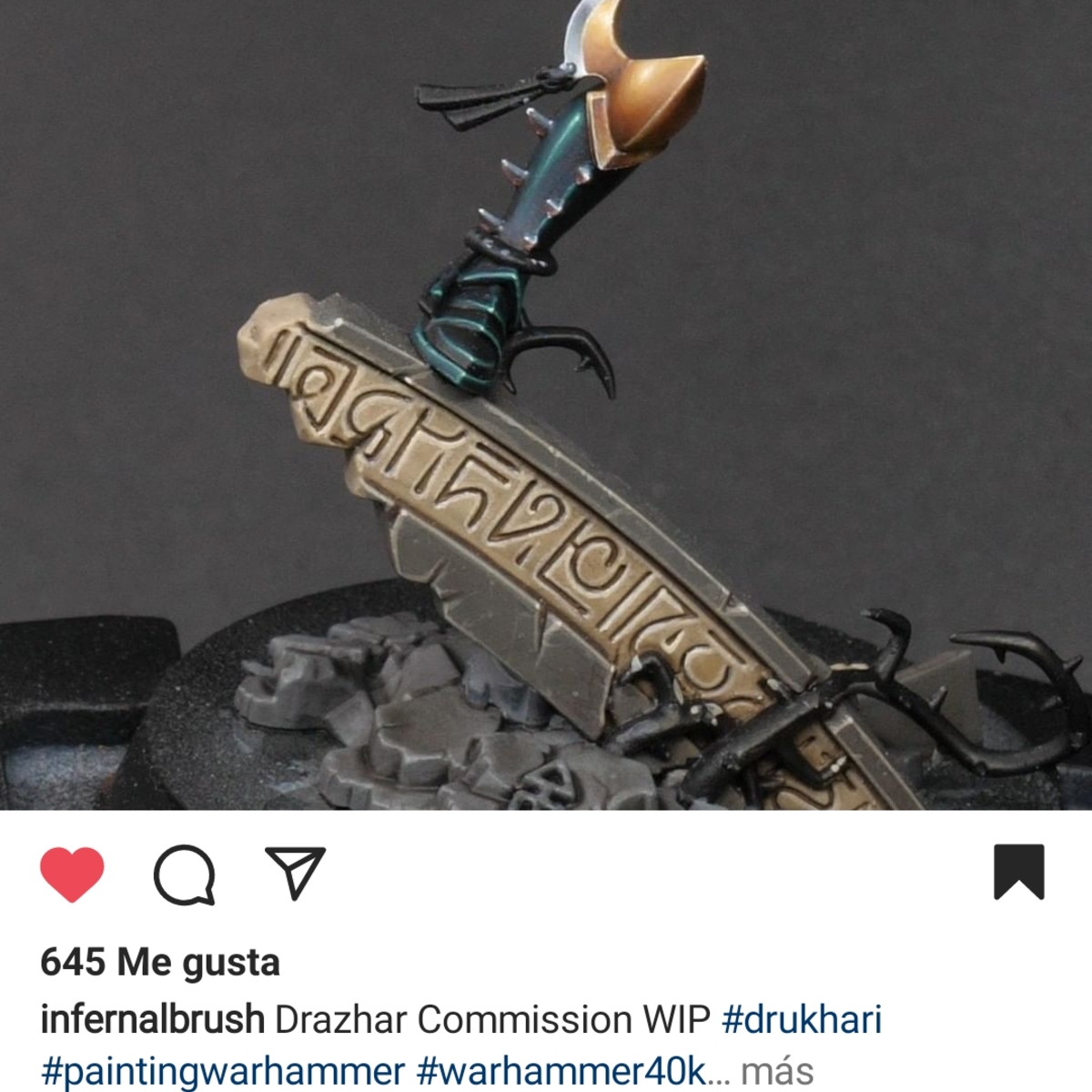
Thin Thunderhawk Blue slightly with water and apply two coats with a large brush, going in the direction of the masonry. Don't worry about neatness around the gold trim yet; you'll paint the gold on top. If you don't have Thunderhawk Blue, mix roughly 2:1 Mechanicus Standard Grey to a dull blue (e.g. Stegadon Scale Green or The Fang) to get that cool, dusty tone in the reference.
3. Shade
Apply Nuln Oil over the whole stone area, fairly thin. Then, while it's still wet, use a damp clean brush to pull excess wash off the flat faces so it settles into the mortar lines, cracks and under ledges. This stops the stone going muddy. Optionally add a touch of Drakenhof Nightshade in the deepest recesses to keep the shadows cool.
4. Drybrush build‑up
Three passes, each lighter and with less paint:
Thunderhawk Blue again, full coverage of the flat faces to bring the base colour back after the wash.
Fenrisian Grey on edges, broken brick ends, and the top face of every block.
Celestra Grey or Pallid Wych Flesh only on the sharpest corners and the shattered top edge of the wall.
Use a large flat drybrush, wipe almost all the paint off, and flick from the top down so highlights sit where daylight would hit.
5. Individual stone variation
The reference has subtle variation between blocks. Pick out a few individual bricks and glaze them with a very thin Thunderhawk Blue + Rhinox Hide mix (warmer) or Thunderhawk + The Fang (cooler). Keep it random — one in every five or six blocks — and re‑drybrush lightly to blend.
6. Gold tracery
Black in the whole window frame and any trim first (Abaddon Black); gold looks flat over grey.
Two thin coats of Retributor Armour.
Wash Reikland Fleshshade over all the gold — this gives the warm, deep tone seen in the photo. Wipe any that slops onto the stone immediately with a damp brush.
Edge‑highlight Liberator Gold along the outer rims of the quatrefoil and along the raised beading of the frame.
Tiny dots of Stormhost Silver or Runefang Steel on the very topmost points if you want extra sparkle. Skip this if you want it to look older.
Tip: hold the piece so the frame is horizontal and use the side of the brush rather than the tip for edge highlights — the tracery curves are easy to skip across.
7. Tie the gold to the stone
Under each gold section, paint a thin streak of Nihilakh Oxide (or Agrax Earthshade if you'd rather it read as grime than verdigris) running down a few millimetres onto the stone. Keep them faint and vertical. This grounds the trim so it doesn't float on top of the wall.
8. Rubble and base
Basecoat Mechanicus Standard Grey, wash Nuln Oil, drybrush Dawnstone then Administratum Grey. Pick out four or five bits of rubble in Thunderhawk Blue so they read as fallen wall, and one or two in Rhinox Hide for contrast. Finish with a little Typhus Corrosion or dry pigment in the low corners, and paint the base rim black.
9. Varnish
Matt varnish the whole piece (Munitorum Varnish or a spray). Terrain gets handled a lot, and it also knocks back any shine from the washes. Come back with a tiny touch of gloss on the gold if you want it to catch the light.
If you'd like I can write the eagle up to the same level of detail, or suggest a non‑GW equivalent paint list if you're using Vallejo or Army Painter.


.jpg)